
Performance highlights and selected moments
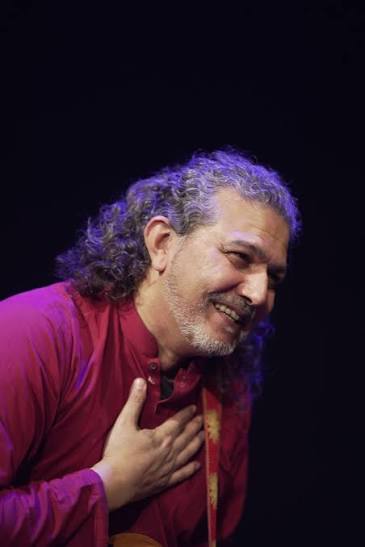
Arieb Azhar is one of Pakistan's distinctive folk and Sufi musicians, known for his powerful baritone voice, thoughtful songwriting and contemporary interpretations of traditional Pakistani poetry. Born on June 30, 1972, in Rawalpindi, he grew up in a culturally rich environment as the son of renowned television pioneer Aslam Azhar. Over a career spanning more than three decades, Arieb has connected Pakistani folk and Sufi traditions with influences from Europe and other parts of the world.
Unlike artists who focus primarily on commercial pop music, Arieb Azhar has built his identity around folk music, Sufi poetry, cultural preservation and socially conscious artistic work. His music has featured poetry by celebrated figures including Bulleh Shah, Khwaja Ghulam Farid, Mian Muhammad Bakhsh and Shah Hussain, helping introduce these traditions to contemporary audiences.
Early Life and Musical Journey
Arieb Azhar's relationship with music developed from an early age. His family environment exposed him to Pakistani folk and classical music as well as Western musical traditions. At 17, he left Pakistan and eventually spent approximately 13 years in Zagreb, Croatia, where he studied philosophy and Indology and performed music. During his European years, he became involved with Irish, Balkan and Pakistani music and performed with his band, The Shamrock Rovers.
His years in Croatia became an important part of his artistic development. Rather than treating Pakistani and European musical traditions as separate worlds, Arieb gradually developed a style that brought different influences together. He returned to Pakistan in the early 2000s and began reconnecting more deeply with the country's folk and classical traditions.
Arieb Azhar's Breakthrough in Pakistan
A major milestone came with the release of his debut album Wajj in 2006. The album featured poetry associated with major Sufi and literary figures and established Arieb as an artist interested in presenting traditional poetry through a contemporary musical language.
His national profile grew considerably after he was invited by Rohail Hyatt to perform on Coke Studio. Arieb has appeared in multiple seasons, including Seasons 2, 3 and 10, and has credited Coke Studio with introducing his music to a much wider audience.
Songs and performances associated with Arieb include “Husn-e-Haqiqi,” “Na Raindee Hai,” “Saif-ul-Malook,” “Maye Ni Main Kinnu Aakhan,” “Makke Gayan,” “Jindrhi Lutti” and “Vehrhe Aawan Mere.” His interpretation of Sufi poetry remains one of the defining elements of his musical identity.
A Distinctive Musical Style
Arieb Azhar's music is difficult to place in a single genre. His work combines Pakistani folk, Sufi poetry, acoustic music and international folk influences. His deep, expressive baritone gives his performances a particularly recognizable quality.
His artistic approach is also strongly connected with the philosophy behind folk music. For Arieb, traditional songs are not simply historical pieces; they can communicate ideas about spirituality, society, humanity and everyday life. This philosophy has helped him build an audience interested not only in entertainment but also in the poetry and cultural history behind the music.
International Career and Global Recognition
One of the biggest milestones in Arieb Azhar's career was his selection for Center Stage, a U.S. cultural exchange programme. In June and July 2012, he and his ensemble undertook a major American tour, performing in seven U.S. states and Washington, D.C., with nine performances and numerous cultural exchange activities.
The tour included a performance at the prestigious John F. Kennedy Center for the Performing Arts in Washington, D.C. His schedule also included the River to River Festival in New York, Old Town School of Folk Music in Chicago and performances in several other American cities.
This international exposure was particularly significant because it presented Pakistani folk and Sufi music to audiences who may not previously have encountered it. Center Stage described his music as an eclectic combination of urban and folk-based songs rooted in Sufi and humanist poetry.
Cultural Work Beyond Music
Arieb Azhar's contribution to Pakistan's arts scene extends far beyond singing. He has played an important role in creating platforms for musicians, artists and cultural practitioners.
In 2014, he co-founded and curated the Music Mela Festival in Islamabad, creating a platform where folk, classical, mainstream and underground musicians could perform and interact with audiences. He continued curating the festival for three years
In 2017, he established Art Langar, a festival platform connecting music and arts with community development, ecology and human values. The initiative also incorporated charitable activities, including work with disadvantaged children.
From 2018 to 2020, Arieb served as Executive Director of T2F (The Second Floor) in Karachi, a well-known cultural and social space. During his tenure, he also curated the third edition of the Creative Karachi Festival.
Film, Documentary and Cultural Projects
Arieb Azhar has also contributed to documentary filmmaking and cultural storytelling. One of the most notable projects connected with him is Indus Blues, a documentary focused on Pakistan's endangered musical instruments, musicians and traditional crafts. He served as one of the film's producers. The documentary went on to receive recognition at international film festivals.
His broader screen work includes involvement with projects exploring music, culture and South Asian artistic traditions. He has also been associated with the documentary Without Shepherds and the travel series Salaam Balkam, which explored music and culture in Bosnia and Croatia.
Arieb Azhar is doing shows, events and concerts all over the world. It’s very easy to be approached and Booked for Events with Fankar Online, A Registered company with vast experience of artist facilitation & Event Planning.
Arieb Azhar is well known and Highly engaged Artist.
Charges of artist for event, show or concert changes time to time and depends on few factors like how much traveling is require, how they will travel, Stay and Performance Fee.